
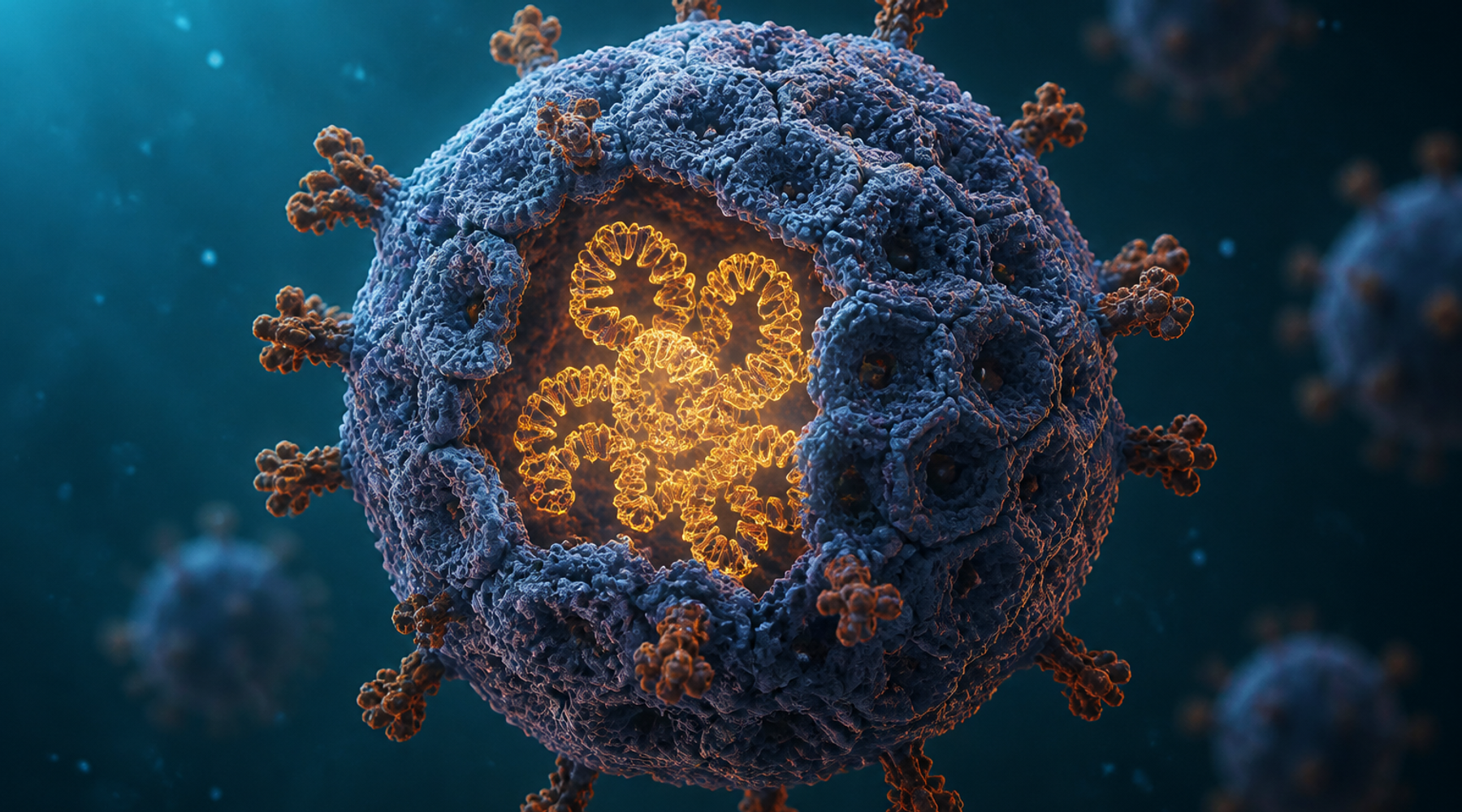
Researchers have identified hundreds of previously unknown giant viruses in various environments, from soil to oceans. These complex organisms challenge our traditional understanding of viral biology and evolution.
Recent breakthroughs in metagenomics have allowed scientists to uncover a vast array of giant viruses that were previously hidden from traditional laboratory methods. Unlike typical viruses, which are often microscopic and contain very few genes, these newly discovered 'girus' entities possess massive genomes and complex structures that rival some bacteria.
## Challenging Biological Boundaries
For decades, viruses were defined by their small size and genetic simplicity. However, these giant viruses can contain over 2,000 protein-coding genes. Many of these genes are responsible for metabolic processes, such as nutrient uptake and energy harvesting, which were once thought to be exclusive to cellular organisms like bacteria and eukaryotes.
## Found Across Diverse Ecosystems
Researchers found these organisms in almost every environment sampled, including deep-sea sediments, permafrost, and common garden soil. This widespread distribution suggests that giant viruses play a much larger role in global nutrient cycling and ecosystem regulation than previously estimated by the scientific community.
## The Role of Metagenomics
The discovery was made possible by analyzing large datasets of environmental DNA. By piecing together genetic fragments from the environment, scientists can identify the presence of these viruses without needing to grow them in a petri dish first. This 'culture-independent' approach is revolutionizing how we map the microbial world.
## Implications for Evolution
The existence of such complex viruses raises fundamental questions about the tree of life. Some researchers suggest that giant viruses may have evolved from even more complex cellular ancestors, while others believe they have simply 'stolen' genes from their hosts over billions of years. Understanding these origins remains a top priority for evolutionary biologists.
Written by
Viralized Staff