Internet theorists recently went viral claiming to have found a 'doorway' in Antarctica via Google Earth. Scientists have finally weighed in on the anomaly near Showa Station.
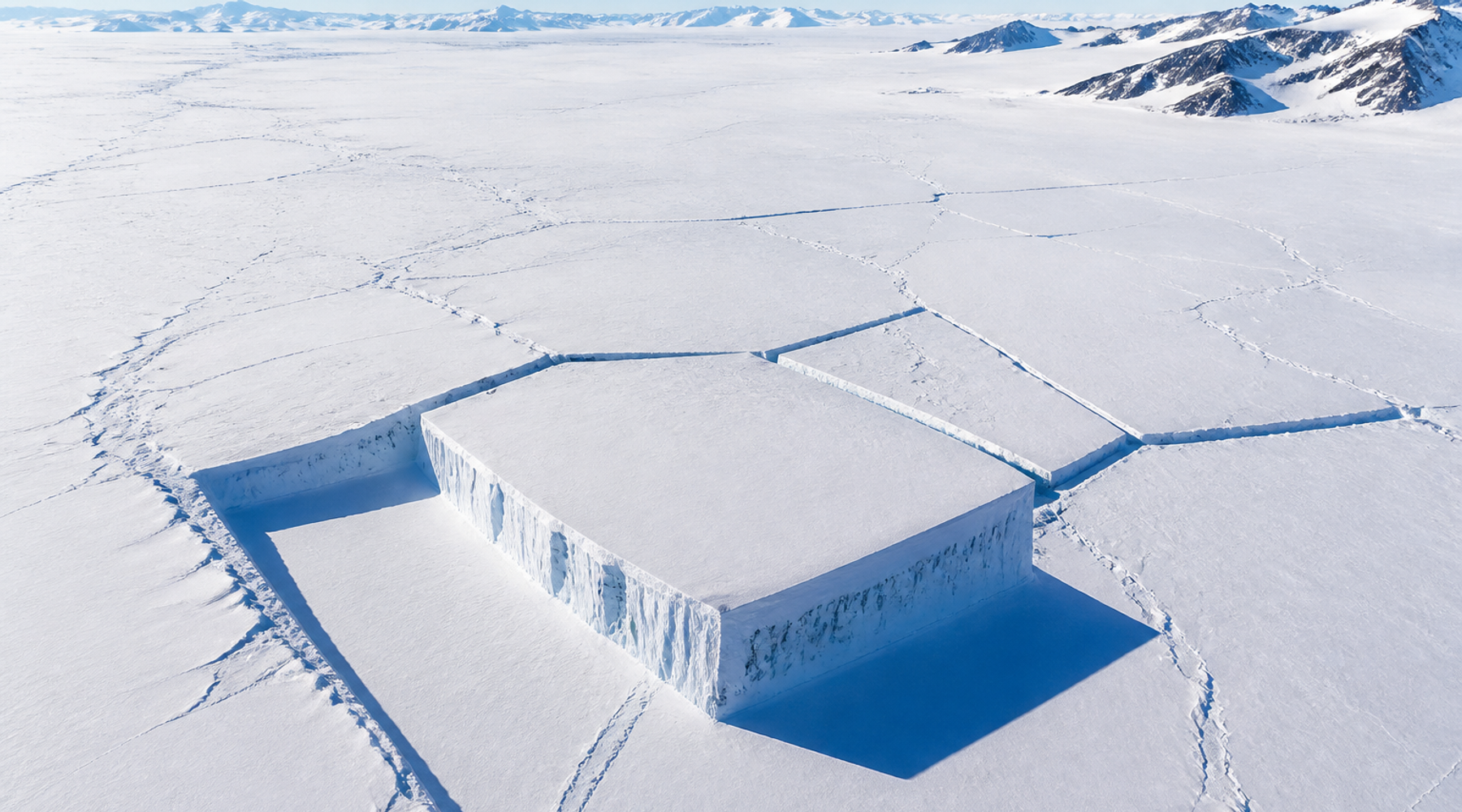
An unusual satellite image from East Antarctica recently sent social media into a frenzy, with users claiming to have discovered a massive doorway carved into the ice. Located southeast of Japan’s Showa Station, the formation's rectangular shape and apparent shadow led to wild speculation about secret bunkers or hidden entrances. However, the geographic reality is much less mysterious than the digital theories suggest.
Experts in glaciology have identified the structure as a simple glaciological anomaly. According to Bethan Davies, a professor of glaciology at Newcastle University, the 'door' is actually a grounded iceberg that has become stuck in shallow water and is now being slowly buried by drifting snow. This process often creates sharp, geometric shapes that look out of place against the windswept landscape.
## The Role of Wind and Ice
The specific site is located in an area of fast ice—sea ice that is 'fastened' to the coastline. When an iceberg calves or a large chunk of ice becomes grounded, it acts as an obstruction. Prevailing winds then deposit snow around the object in a process called 'snow drifting.' Over time, these drifts can form steep, flat walls that mimic the appearance of architectural structures when viewed from a high altitude.
## Natural Patterns in the Cold
This isn't the first time Google Earth has sparked such theories. From the 'Antarctic Pyramid' (which turned out to be a nunatak, or a mountain peak poking through an ice sheet) to the 'Ice Ship,' human brains are wired for pareidolia—the tendency to see familiar patterns like doors or faces in random shapes. In the harsh environment of the South Pole, wind erosion can sculpt ice into remarkably symmetrical forms.
## Scientific Context
Researchers routinely use satellite imagery to monitor ice shelf stability and penguin colonies, rather than searching for anomalies. While the 'doorway' looks compelling at a specific zoom level, local topography reveals several similar ridges and ice-tails in the vicinity, all formed by the same wind-driven processes. For now, the secret entrance remains nothing more than a trick of light, shadow, and heavy snowfall.
Written by
Viralized Staff