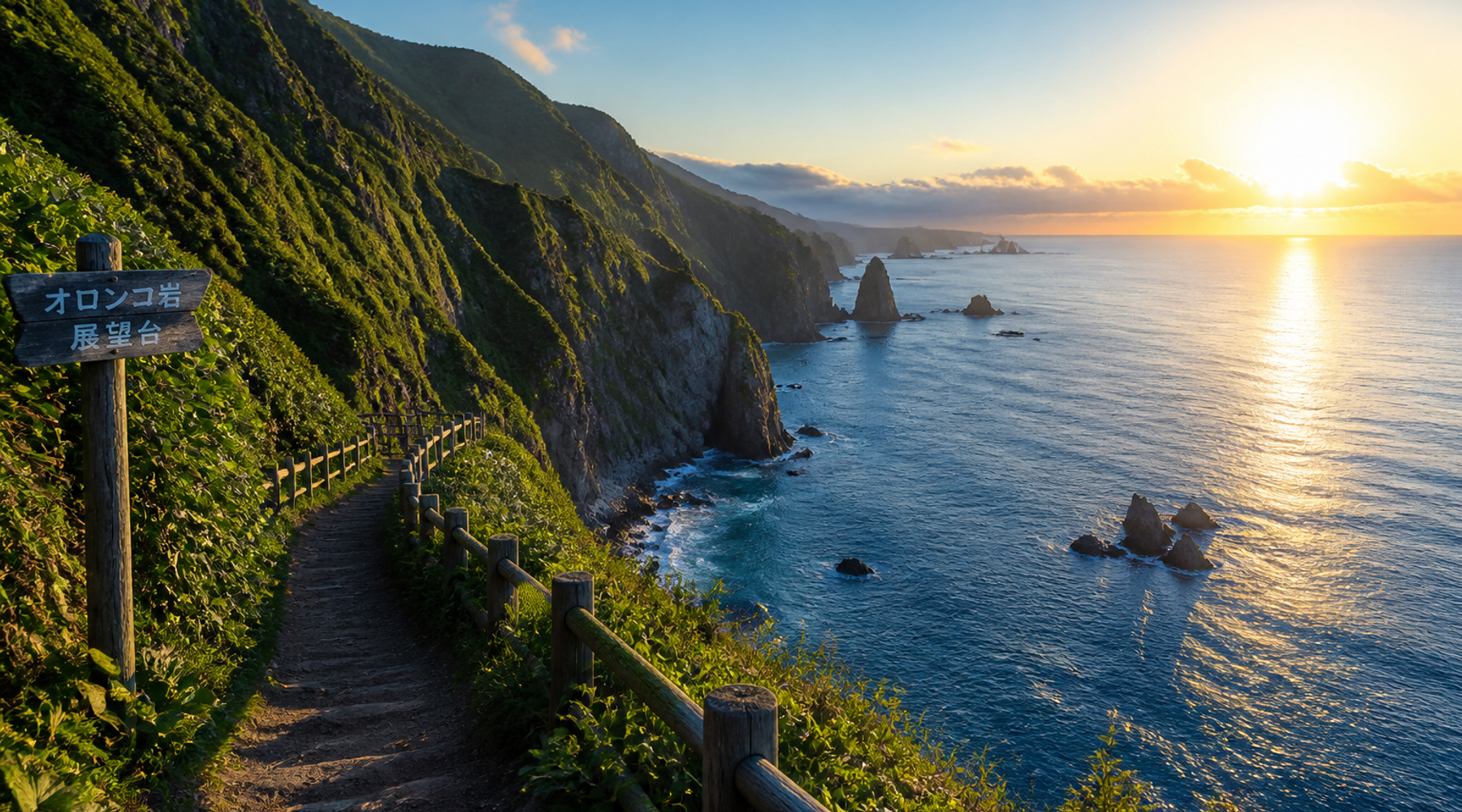
Spanning over 1,000 kilometers along Japan’s northeastern coast, the Michinoku Coastal Trail is a masterpiece of scenic hiking and cultural resilience, connecting Hachinohe to Soma.
A New Landmark for Adventure
Japan has officially inaugurated one of its most ambitious outdoor projects: the Michinoku Coastal Trail. Stretching over 1,000 kilometers along the Pacific coastline of the Tohoku region, the trail offers a blend of rugged cliffs, traditional fishing villages, and lush forests. It connects the city of Hachinohe in Aomori Prefecture to Soma in Fukushima Prefecture, providing hikers with a unique window into a part of Japan often missed by typical tourist routes.
A Path Built on Resilience
The creation of the trail is deeply tied to the recovery efforts following the 2011 Great East Japan Earthquake and Tsunami. Local communities and government planners envisioned the path as a way to revitalize the region, inviting hikers to witness the ongoing reconstruction and support local economies. It is designed not just as a physical challenge, but as a living monument to human perseverance and the healing power of the natural landscape.
Diverse Terrain and Culture
Hikers on the Michinoku Coastal Trail can expect a wide Variety of terrain. The northern sections feature the dramatic Takonokura cliffs, while the southern stretches offer gentle beach walks and flat coastal plains. Beyond the scenery, the trail is punctuated by opportunities to engage with local Shinto shrines, historic architecture, and the region's famous seafood. Unlike many remote mountain treks, this trail frequently passes through small towns, allowing travelers to stay in local guesthouses rather than camping.
Accessibility for All Levels
While trekking the entire length takes over a month, the trail is highly accessible for day trips and section hiking. The infrastructure includes clear signage and numerous access points via rural train lines. Whether visitors choose a short walk through the Tanesashi Coast’s grassy meadows or a multi-day journey through the rugged Sanriku Fukko National Park, the trail emphasizes a slow-travel philosophy that encourages deeper connection with the environment and the people who call it home.
Written by
Viralized Staff