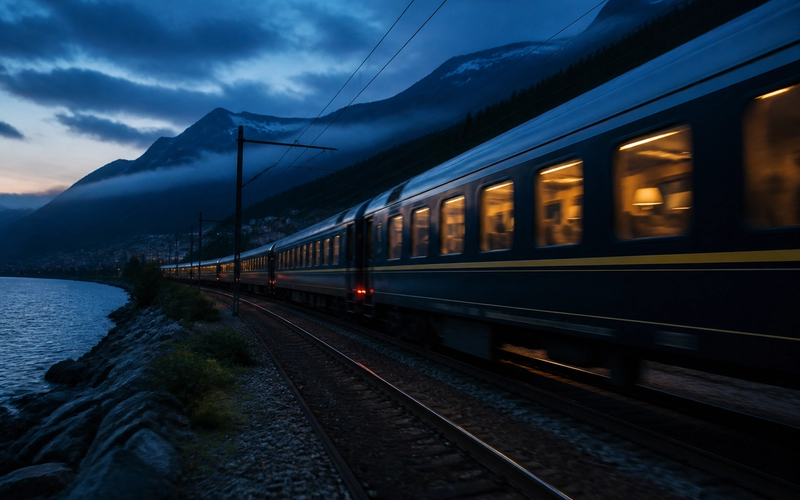
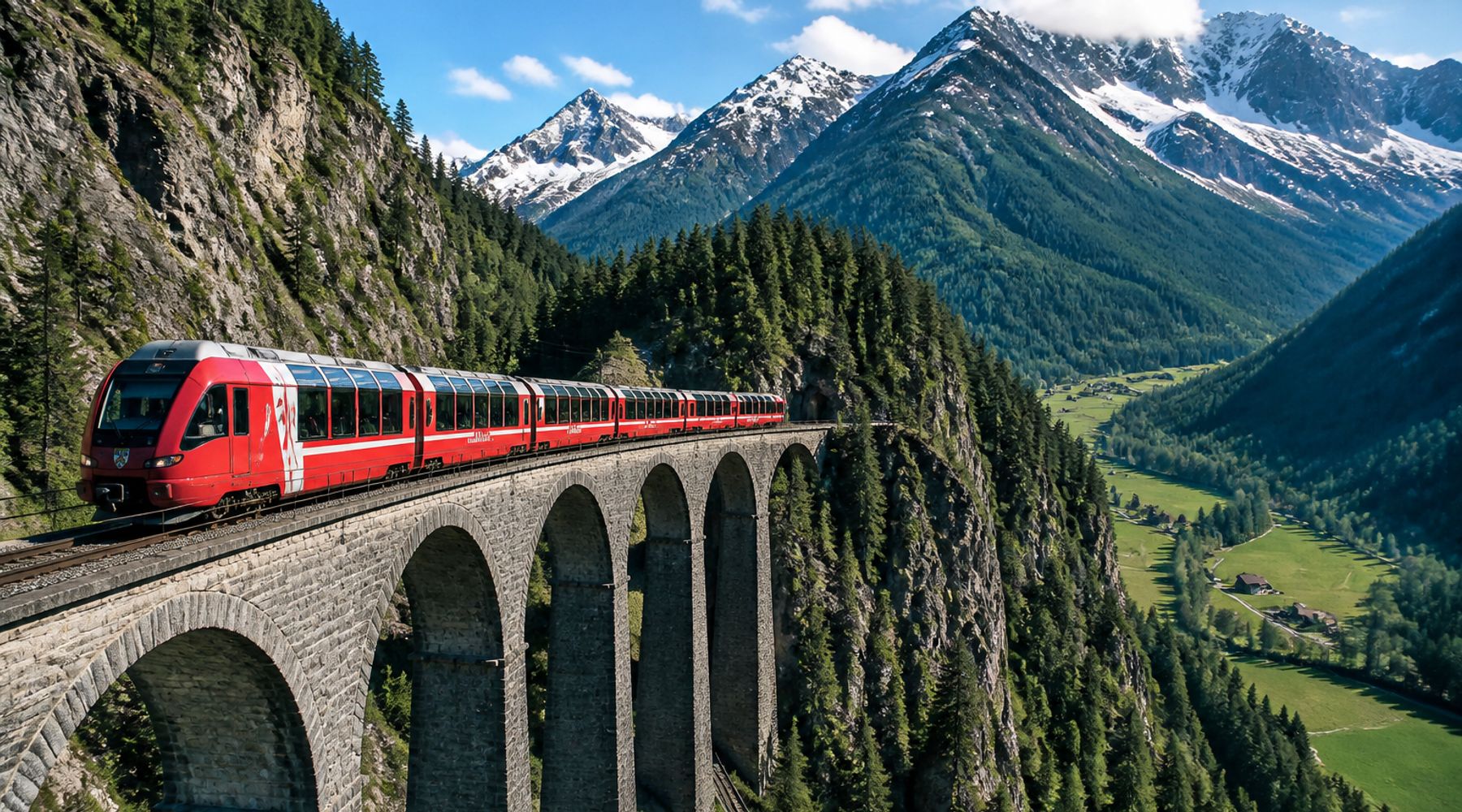
Traveling across the Swiss Alps, the Glacier Express is often called the world's slowest express train. While photos show the peaks, the eight-hour journey offers a sensory experience that still surprises modern travelers.
A Slow Journey Through the High Alps
The Glacier Express has long been touted as the pinnacle of rail travel, connecting the mountain resorts of Zermatt and St. Moritz. Despite its name, the train is famously slow, taking roughly eight hours to cover 180 miles. This deliberate pace is exactly why it remains a bucket-list item; it forces a transition from the frantic speed of modern life to the rhythmic cadence of the Swiss countryside.
Engineering Meets Nature
What photos often fail to capture is the sheer scale of the engineering required to navigate this terrain. The route traverses 291 bridges and passes through 91 tunnels. As the train climbs toward the Oberalp Pass, the highest point at over 6,600 feet, passengers can feel the temperature drop and see the vegetation shift from lush valleys to rugged, snow-dusted rock. The panoramic windows are designed to offer an unobstructed view, but the scale of the Landwasser Viaduct—a curved limestone structure—is something that must be felt as the train tilts over the gorge.
The In-Flight Experience on Rails
While budget travelers can opt for standard carriages, the introduction of Excellence Class has shifted the focus toward luxury. Regardless of the class, the focus remains on regional gastronomy. Meals are prepared fresh on board, featuring Swiss cheeses and mountain-grown wines. There is a specific charm to watching a waiter pour wine while the train banks into a sharp curve, a feat of balance that adds a layer of performance to the meal.
Beyond the Glass
Many travelers worry that eight hours behind glass might feel confining, but the route is divided into distinct geological chapters. From the Rhine Gorge, often called the Grand Canyon of Switzerland, to the high alpine meadows dotted with traditional chalets, the scenery is restorative rather than repetitive. It is a rare example of a tourist experience that manages to be as quiet and contemplative as the promotional photography suggests.
Written by
Viralized Staff