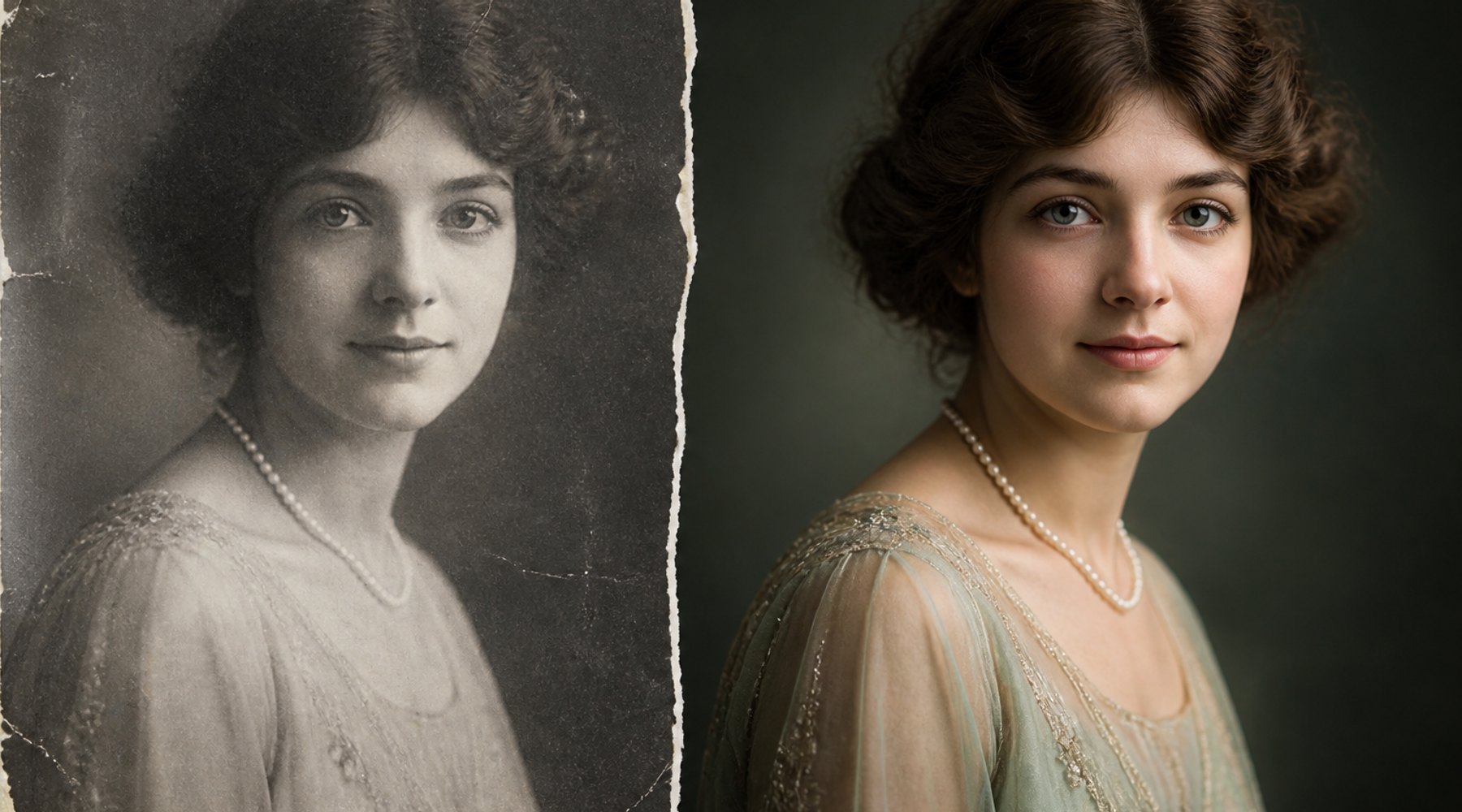
A new wave of generative AI tools is moving beyond text, offering the ability to repair torn, faded, and blurred historical photographs with professional-grade precision in seconds.
## A Digital Time Machine
Restoring old family photographs used to be a painstaking manual process requiring hours of expertise in software like Photoshop. New advancements in generative adversarial networks (GANs) have changed that, allowing users to drag and drop damaged images into AI models that reconstruct missing details in seconds. These tools identify cracks, water damage, and color fading to produce a clean version of the original shot.
## How the Reconstruction Works
Unlike traditional filters, these AI tools don't just smooth over artifacts. They use deep learning to predict what should be there. By analyzing millions of high-resolution portraits, the software can accurately recreate facial features, hair textures, and clothing patterns that have been lost to time. The result is a high-definition image that maintains the likeness of the subject without looking like a cartoon.
## Colorization and Upscaling
Beyond simple repair, the latest releases include intelligent colorization and 4K upscaling. The AI analyzes the grayscale values and environmental context to apply realistic skin tones and natural colors to landscapes. This process breathes new life into historical archives, making moments from a century ago feel as though they were captured on a modern smartphone.
## Accessibility for Everyone
While professional restorationists still hold an edge for museum-quality work, these AI platforms are becoming widely accessible to the public. Many are available as free web-based tools or low-cost apps, democratizing the ability to preserve family legacies. As the technology continues to evolve, the line between a physical antique and a modern digital copy is becoming increasingly thin.
Written by
Viralized Staff